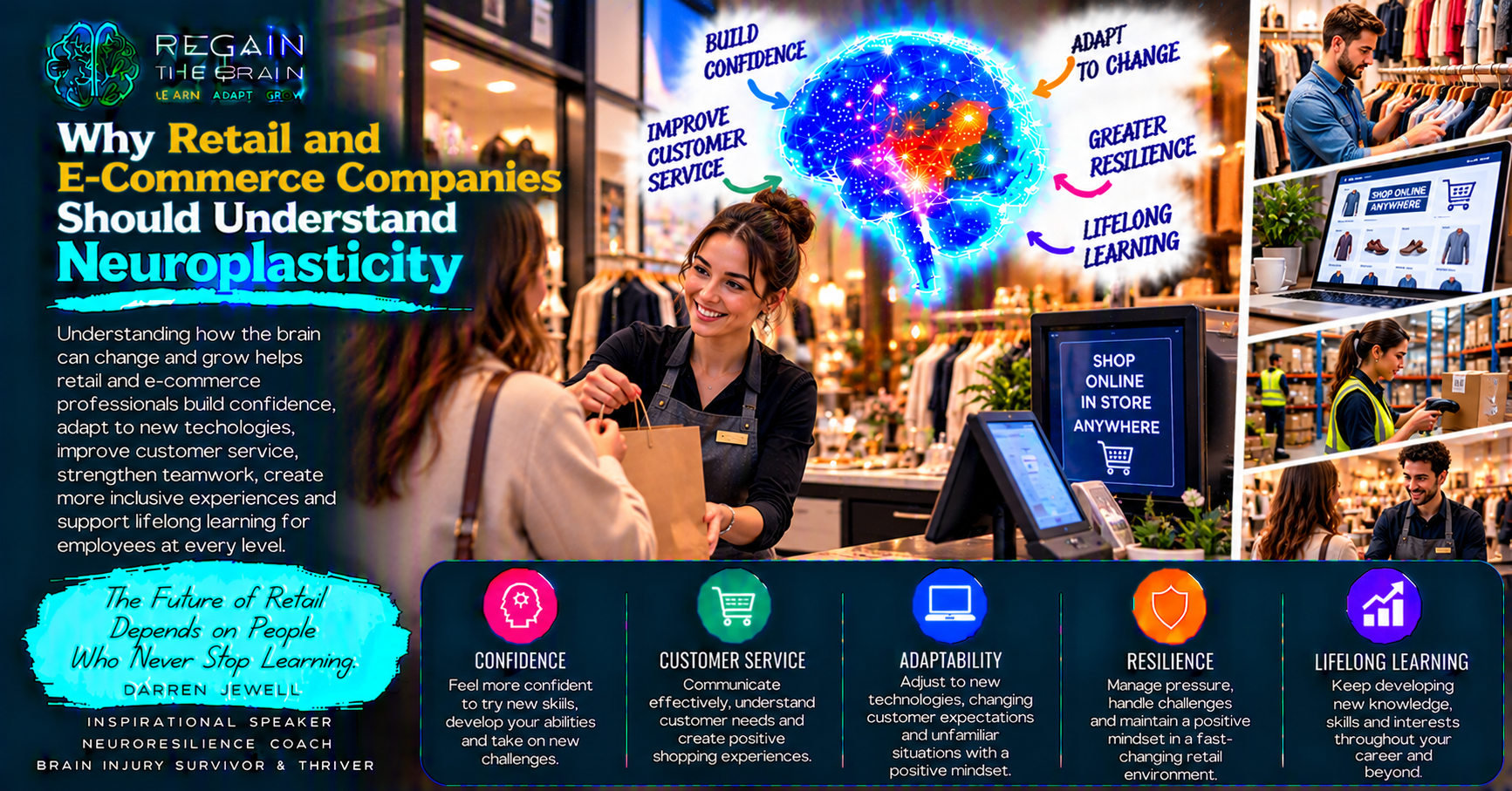
Imagine walking into a shop you have visited for years. The products may look familiar, but almost everything behind the scenes is changing. Digital payments, online ordering, artificial intelligence, customer expectations and new technologies are transforming the retail experience. Yet perhaps the most important resource any retailer has is not its technology, products or premises. It is the ability of its people to continue learning.
Retail has always been an industry of change.
Shopping habits evolve.
New technologies emerge.
Consumer expectations develop.
And businesses must adapt to remain relevant.
Today, the relationship between physical retail and e-commerce is more connected than ever.
A customer may discover a product on social media.
Research it online.
Visit a shop to see it in person.
And eventually make a purchase through a mobile application.
Behind these experiences are people.
Sales assistants.
Store managers.
Customer service professionals.
Warehouse employees.
Digital marketing specialists.
E-commerce developers.
Logistics teams.
And retail executives.
These professionals work in environments where learning, communication, confidence and adaptability matter.
But I believe there is another subject that deserves greater attention within retail and e-commerce companies.
Neuroplasticity — the remarkable ability of the human brain to continue learning and adapting throughout life.
My name is Darren Jewell. I am a London-based inspirational speaker, NeuroResilience Coach, brain injury survivor and passionate advocate for lifelong learning.
My mission is to make neuroplasticity an everyday word.
And I believe retail and e-commerce organisations have an opportunity to explore this fascinating subject through their leadership, employee development and workplace wellbeing programmes.
1. What Is Neuroplasticity?
Neuroplasticity describes the brain’s ability to change its connections and patterns of activity in response to learning, experience and other biological processes.
Put simply, our brains are not completely fixed.
Throughout adulthood, people retain the capacity to acquire new knowledge, develop skills and adapt to unfamiliar experiences.
When someone learns a language, practises a musical instrument, develops a professional skill or becomes familiar with new technology, the brain participates in processes that support learning.
With appropriate instruction, practice and feedback, unfamiliar tasks may gradually become more familiar.
However, neuroplasticity does not mean learning is always easy.
It does not guarantee that everyone can achieve identical outcomes.
And it does not mean determination alone can overcome every challenge.
But it provides an important scientific perspective on our continuing capacity to learn.
For retail and e-commerce companies, understanding neuroplasticity can reinforce the importance of confidence, adaptability and lifelong learning.
2. Why Retail Is an Industry of Constant Change
Retail has changed considerably over the years.
Traditional high streets have evolved.
Shopping centres have adapted.
Online retail has expanded.
And mobile technology has transformed how customers discover and purchase products.
Employees may need to understand unfamiliar systems.
Managers may need to adapt their operations.
And organisations may need to develop new ways of communicating with customers.
Understanding neuroplasticity reinforces the importance of continued professional development.
However, successful change also requires appropriate planning, investment and employee support.
The future of retail is not simply about new technology. It is also about helping people develop the skills needed to use it.
3. Why Customer Expectations Continue to Evolve
Customers increasingly expect convenient and accessible shopping experiences.
They may want clear product information.
Flexible delivery options.
Helpful customer service.
Accessible websites.
And a consistent experience across physical and digital channels.
Meeting these expectations requires organisations to develop relevant skills and systems.
Customer service employees may need additional training.
Digital teams may need to learn unfamiliar technologies.
And managers may need to respond to changing consumer behaviour.
Understanding neuroplasticity reinforces the importance of continued learning.
However, customer experience improvements depend on practical training, appropriate resources and sound business decisions.
4. Why Confidence Matters in Retail Careers
Retail employees interact with customers from different backgrounds every day.
Some people feel comfortable approaching unfamiliar customers.
Others may initially feel nervous.
A new sales assistant may worry about making mistakes.
A customer service professional may feel uncertain when handling complaints.
A warehouse employee may need to learn unfamiliar technology.
And a junior manager may question their ability to lead a team.
Confidence can influence how people approach these situations.
But confidence does not mean never feeling nervous.
It can develop through preparation, experience, encouragement and appropriate support.
I understand what it feels like to doubt your abilities.
For approximately half a century, confidence was something I struggled to develop.
Growing up with the consequences of a serious childhood brain injury affected how I viewed myself.
There were many occasions when I assumed certain achievements were beyond me.
But later in life, I began challenging those assumptions.
Sometimes the biggest obstacle to learning something new is the belief that we are incapable of learning it.
5. My Personal Journey: From Brain Injury Survivor to Discovering New Possibilities
At just 15 months old, I suffered a serious brain injury after falling from a balcony.
I spent three weeks in a coma.
The consequences of that injury affected my physical abilities, coordination, confidence and many aspects of my life.
Growing up, I experienced challenges that other people did not always understand.
I also experienced bullying.
For many years, those experiences influenced how I viewed myself.
I questioned my abilities.
I hesitated when opportunities appeared.
And I often assumed that certain achievements were beyond me.
For approximately half a century, confidence was something I struggled to develop.
There were activities I wanted to try but doubted I could achieve.
There were opportunities I avoided because I feared failure.
And there were times when the beliefs I held about myself seemed more powerful than my curiosity.
But later in life, something began to change.
At 54, I decided to learn to play the piano.
For someone who had experienced difficulties with coordination following a childhood brain injury, this was a meaningful challenge.
I needed to learn to read music.
Understand where the notes were.
Coordinate my hands.
Remember sequences.
And practise movements that initially felt difficult.
There were moments of frustration.
There were occasions when progress seemed painfully slow.
And there were times when I wondered whether I would ever improve.
But I continued practising.
Gradually, I began noticing progress.
Things that had once felt unfamiliar started becoming more manageable.
And something important happened.
I began questioning some of the assumptions I had held about my abilities.
That experience encouraged me to explore neuroplasticity and the science of lifelong learning.
But it also encouraged something else.
Curiosity.
I began wondering what other subjects I might enjoy exploring.
Writing became one of them.
Technology became another.
I developed interests in language learning, website development and creating digital experiences.
Each unfamiliar activity introduced new challenges.
Sometimes I needed help.
Sometimes I made mistakes.
And sometimes I had to repeat the same task several times before I understood it.
But I began approaching learning differently.
Rather than immediately assuming I could not do something, I became more willing to explore whether I could learn.
That change in perspective was enormously important to me.
It also influenced my desire to share my story.
Today, I speak about brain injury, confidence, resilience and lifelong learning.
I do not claim that neuroplasticity has reversed my childhood brain injury.
Nor do I believe determination alone can overcome every challenge.
Instead, my experiences have strengthened my belief that people deserve opportunities to learn, develop and explore their abilities with appropriate support.
This is one of the reasons retail and e-commerce interest me.
The industry is constantly changing.
Employees may need to learn unfamiliar technologies.
Managers may need to develop new skills.
And organisations may need to adapt to different ways of working.
I understand the uncertainty that can come with attempting something unfamiliar.
But I also understand the satisfaction of discovering that a skill which once seemed difficult can gradually become more manageable.
I started learning the piano at 54. My brain didn’t ask my age.
That experience encouraged me to challenge limit