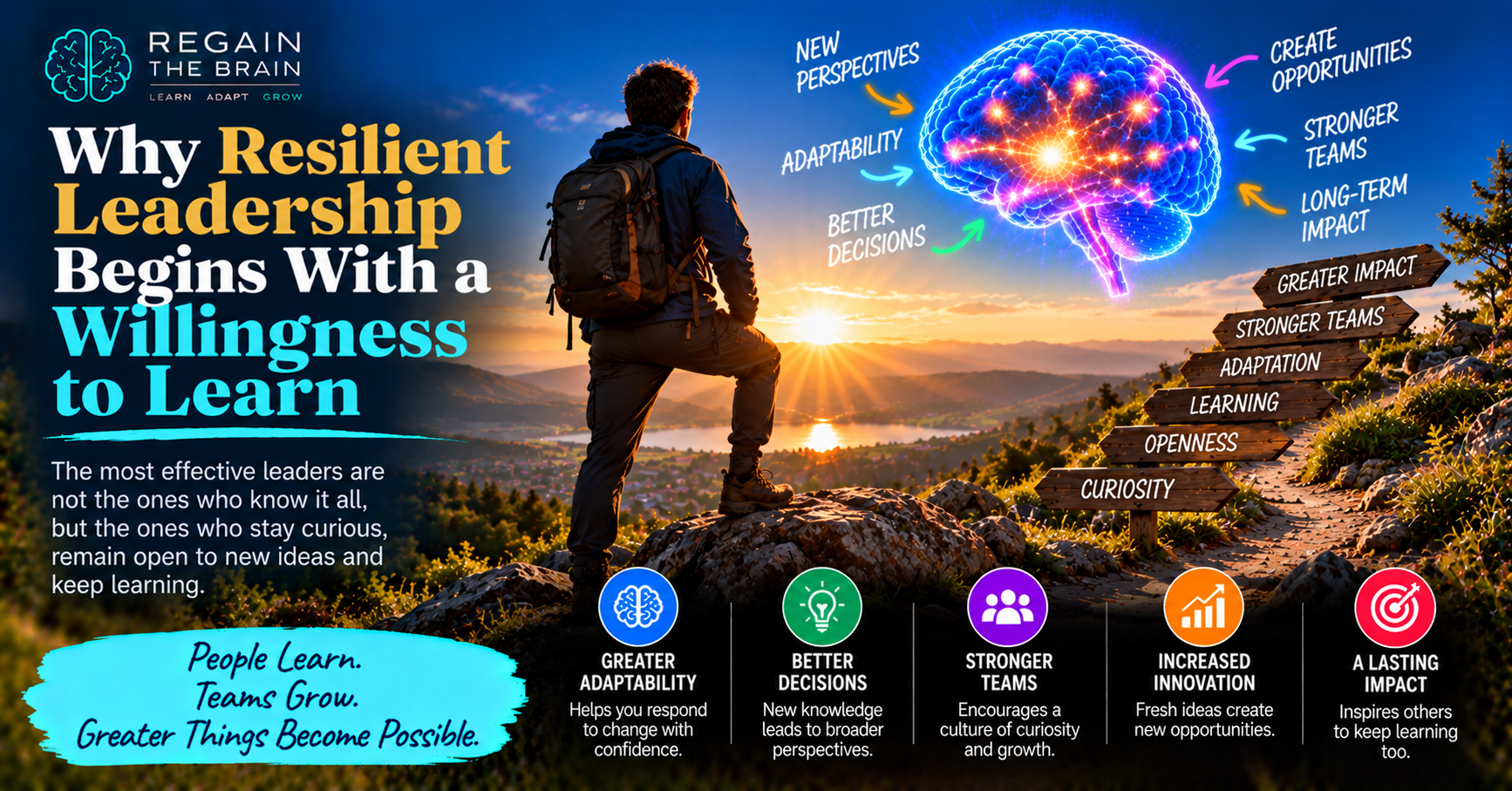
Leadership is often associated with confidence, decisiveness and experience.
But effective leaders also need the willingness to recognise when their knowledge is incomplete.
Modern organisations face constant change.
New technologies, evolving customer expectations and unexpected challenges require leaders to remain adaptable.
Leadership resilience training can help people explore how they respond to uncertainty, setbacks and difficult decisions.
An important part of this process is recognising the value of learning.
Leaders who remain curious may be better positioned to consider alternative approaches, listen to feedback and support the development of their teams.
Neuroplasticity provides an interesting scientific perspective because the adult brain continues to adapt through experience and practice.
However, the ability to learn does not remove the need for supportive working conditions or realistic expectations.
Resilient leadership is not about expecting employees to work harder regardless of circumstances.
It is about creating environments where people can communicate, develop skills and receive appropriate support.
Through Regain the Brain, I encourage leaders to think about the relationship between personal growth, resilience and lifelong learning.
Because leadership development should never be considered complete.
The willingness to keep learning may be one of a leader’s most valuable qualities.
#LeadershipResilienceTraining #ResilientLeadership #Neuroplasticity #LeadershipDevelopment