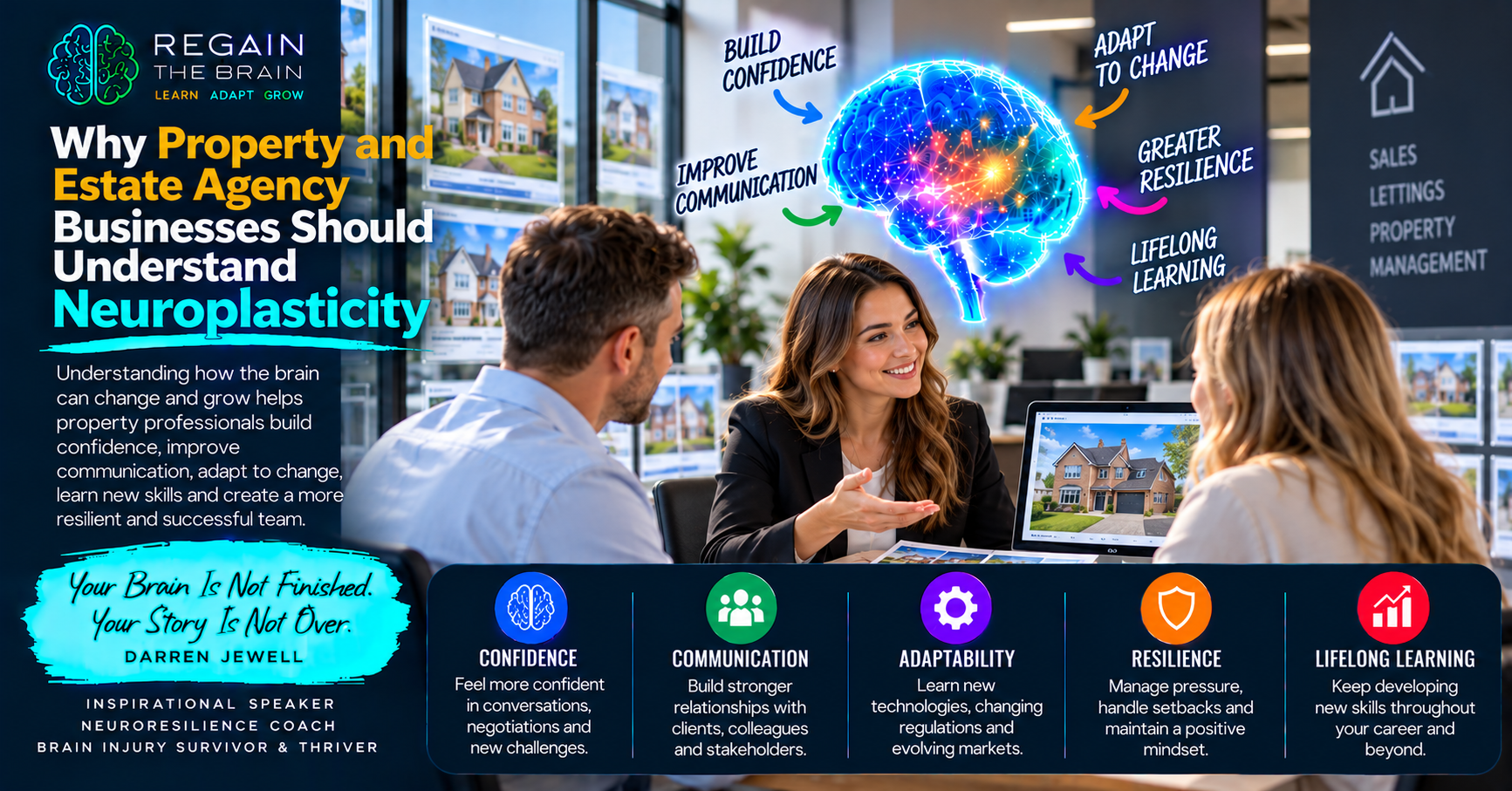
Estate agents spend their careers helping people move into new homes, make important decisions and begin new chapters in their lives. But how often do property businesses encourage their own employees to understand the remarkable ability of the human brain to learn, adapt and develop?
The property industry is built on relationships, communication, trust, professional knowledge and the ability to respond to changing circumstances.
Every day, estate agents, letting agents, property managers, negotiators, valuers and commercial property professionals help people make significant financial and personal decisions.
But the property industry is constantly changing.
Digital property platforms, artificial intelligence, virtual property tours, evolving legislation, changing housing market conditions and new customer expectations are transforming how estate agencies operate.
At the same time, property professionals must continually develop their communication skills, learn unfamiliar technologies and respond to challenging situations.
This raises an important question.
Could understanding neuroplasticity help estate agents and property professionals approach learning, workplace change and professional development with greater confidence?
My name is Darren Jewell. I am a London-based inspirational speaker, NeuroResilience Coach, brain injury survivor and passionate advocate for lifelong learning.
I believe neuroplasticity deserves greater attention in estate agency employee training, property industry leadership development and workplace wellbeing programmes.
My mission is to make neuroplasticity an everyday word.
And I believe property businesses have an excellent opportunity to introduce this fascinating subject to their employees.
1. What Is Neuroplasticity and Why Does It Matter in Estate Agency?
Neuroplasticity describes the brain’s ability to change its connections and patterns of activity in response to learning, experience and other biological processes.
Scientific research has demonstrated that the adult brain retains the capacity for plasticity throughout life, although the nature and extent of that capacity vary between individuals.
This is particularly relevant to property professionals.
An estate agent learning negotiation techniques, a letting agent mastering new property management software or a property manager developing leadership skills is engaging processes associated with learning and memory.
With appropriate instruction, practice and feedback, people can continue developing professional skills throughout their careers.
Understanding neuroplasticity can help challenge the assumption that someone’s current abilities represent the limits of what they can learn.
However, neuroplasticity does not mean that every skill can be mastered through determination alone.
Effective learning requires appropriate training, resources, practice and supportive working conditions.
For estate agencies, neuroplasticity awareness can complement existing employee training and professional development programmes.
2. Why Estate Agents Need Continuous Professional Development
The property industry is constantly evolving.
Housing market conditions change.
Property legislation develops.
Customer expectations evolve.
Digital technologies transform how properties are marketed.
New approaches to property management emerge.
These developments create an ongoing need for professional learning.
An estate agent may need to understand unfamiliar property regulations.
A letting agent may need to learn new digital tenancy management systems.
A property negotiator may require additional communication training.
A branch manager may need to develop leadership skills.
Understanding neuroplasticity can encourage employees to recognise that professional competence develops through learning, experience and constructive feedback.
For estate agency owners and HR managers, introducing neuroplasticity awareness into property industry employee development can reinforce the importance of continuous professional learning.
The property market may change, but our opportunity to keep learning does not have to end.
3. Neuroplasticity and Building Confidence in Estate Agents
Confidence is important in estate agency.
Property professionals regularly communicate with buyers, sellers, landlords, tenants and investors.
They may need to negotiate offers, explain complex information, conduct property viewings and manage challenging conversations.
A newly recruited estate agent may feel nervous conducting their first viewing.
A property negotiator may initially struggle with difficult negotiations.
An experienced branch manager may feel uncertain when introducing unfamiliar technology.
I understand what it feels like to question your own abilities.
For approximately half a century, confidence was something I struggled to develop.
Growing up with the consequences of a serious childhood brain injury affected how I viewed myself and what I believed I could achieve.
Later in life, I began challenging some of those assumptions.
Learning to play the piano in my fifties helped me appreciate that confidence can develop through patience, practice and gradual progress.
Confidence does not always come before we attempt something unfamiliar. Sometimes it develops because we were willing to begin.
For estate agents, this message can encourage a constructive approach to learning new skills and taking on unfamiliar responsibilities.
4. Why Communication Skills Matter in Property Businesses
Communication is central to successful estate agency.
Property professionals must listen carefully, explain information clearly and manage expectations.
Buying or selling a property can be one of the most significant financial decisions someone makes.
Moving home can also be an emotional experience.
Customers may feel excited, uncertain, frustrated or anxious.
Estate agents must communicate professionally while recognising the circumstances of individual clients.
Communication skills can develop through structured training, experience and constructive feedback.
Understanding neuroplasticity can reinforce the importance of continued learning.
However, simply understanding neuroplasticity does not automatically improve communication.
Effective customer service also depends on empathy, preparation, professional judgement and ethical behaviour.
For estate agencies, neuroplasticity awareness can complement existing communication and customer service training programmes.
5. My Personal Journey: From Brain Injury Survivor to Inspirational Speaker
At just 15 months old, I suffered a serious brain injury after falling from a balcony.
I spent three weeks in a coma.
The consequences of that injury affected my physical abilities, coordination, confidence and many aspects of my life.
Growing up, I experienced challenges that other people did not always understand.
I also experienced bullying, which affected my self-belief.
For approximately half a century, confidence was something I struggled to develop.
There were many occasions when I questioned whether I was capable of achieving certain things.
But later in life, I began challenging those assumptions.
At 54, I decided to learn to play the piano.
It was a completely unfamiliar experience.
I had to learn to read music, coordinate my hands, remember sequences and develop new movements.
Progress required concentration, patience and repeated practice.
There were moments of frustration.
There were times when I questioned whether I would ever improve.
But I continued learning.
That experience encouraged me to explore the science of neuroplasticity and helped me reconsider some of the beliefs I had held about my own abilities.
My curiosity has since encouraged me to explore writing, music, technology, language learning and the development of digital learning experiences.
Today, I share my journey as an inspirational speaker and NeuroResilience Coach.
My message is not that everyone can overcome every challenge through determination alone.
It is that people deserve opportunities to explore their abilities with appropriate support and realistic expectations.
I do not claim that neuroplasticity has reversed my childhood brain injury.
Instead, my experiences have strengthened my belief that learning and personal development can remain meaningful throughout life.
Your Brain Is Not Finished. Your Story Is Not Over.
6. Why Workplace Resilience Matters in Estate Agency
Estate agency can be a demanding profession.
Property sales may fall through.
Customers may change their minds.
Negotiations may become difficult.
Housing market conditions may affect business performance.
Employees may face demanding targets and unpredictable workloads.
These experiences can affect confidence and motivation.
This makes estate agency workplace resilience and employee wellbeing important subjects.
However, resilience should never mean expecting employees to tolerate unreasonable targets, excessive working hours or unhealthy workplace cultures.
Genuine workplace resilience requires supportive leadership, realistic expectations, appropriate resources and access to professional support.
Neuroplasticity can contribute to educational conversations about learning and adaptation.
But it is not a substitute for effective management or appropriate wellbeing policies.
For estate agencies organising staff development days, an inspirational presentation can encourage reflection on confidence, learning and personal growth.
7. Neuroplasticity and Negotiation Skills
Negotiation is an important part of property transactions.
Estate agents may negotiate offers between buyers and sellers.
Letting agents may discuss tenancy arrangements.
Commercial property professionals may negotiate complex agreements.
These responsibilities require communication, listening, preparation and professional judgement.
Negotiation skills can develop through structured training, experience and constructive feedback.
Understanding neuroplasticity can reinforce the value of continued learning.
For example, a newly recruited estate agent may initially struggle with negotiations but develop greater competence through appropriate coaching.
However, neuroplasticity awareness alone does not guarantee better negotiation outcomes.
Effective negotiation also depends on market knowledge, ethical practice, preparation and an understanding of customer needs.
8. Why Estate Agencies Should Encourage a Growth Mindset
A growth mindset involves recognising that abilities can develop through effective learning strategies, practice, feedback and appropriate support.
This concept can be relevant to estate agents at every career stage.
A trainee negotiator may initially struggle with property valuations.
An experienced estate agent may need to develop digital marketing skills.
A branch manager may be learning unfamiliar leadership techniques.
Understanding neuroplasticity can contribute to a workplace culture where learning is encouraged and constructive feedback is valued.
However, a growth mindset should never become an excuse for unrealistic expectations.
Employees need appropriate training, resources and supportive management.
The most effective workplaces encourage people to ask questions, develop skills and make progress without feeling embarrassed about being beginners.
9. Adapting to Artificial Intelligence in Estate Agency
Artificial intelligence is influencing how property businesses operate.
AI-powered tools can assist with property marketing, administrative processes, customer enquiries, market analysis and document management.
These developments create opportunities for greater efficiency.
But they also require employees to develop new skills.
Some property professionals welcome technological change.
Others may feel uncertain about how their roles will evolve.
Understanding neuroplasticity can help challenge the assumption that experienced employees are incapable of learning unfamiliar systems.
However, successful AI adoption requires appropriate training, human oversight and responsible organisational policies.
Property businesses must also consider accuracy, data protection, fair treatment of customers and relevant legal requirements.
For estate agencies, neuroplasticity awareness can complement digital transformation programmes by encouraging curiosity and confidence in learning.
10. Why Estate Agency Leaders Should Understand Neuroplasticity
Estate agency leaders must balance commercial performance, customer relationships, employee development and changing market conditions.
Effective leadership requires communication, adaptability and professional judgement.
Understanding neuroplasticity can provide a useful perspective on continuing professional development.
Leaders can develop unfamiliar skills through training, experience and constructive feedback.
However, leadership development requires practical application and organisational support.
For estate agency owners, managing directors and branch managers, an inspirational presentation about neuroplasticity can encourage reflection on the learning culture they create.
Great leaders do not need to know everything. They need to remain willing to learn.
11. Neuroplasticity and Learning from Unsuccessful Property Transactions
Not every property transaction reaches completion.
A buyer may withdraw an offer.
A mortgage application may be unsuccessful.
A property chain may collapse.
A landlord may decide not to proceed with a letting.
These experiences can be disappointing for employees and customers.
However, unsuccessful transactions may provide opportunities for professional reflection.
Estate agents can review communication, processes and decisions to identify potential improvements.
Understanding neuroplasticity provides background knowledge about learning through experience.
However, improvement requires appropriate evaluation, constructive feedback and effective changes to working practices.
An unsuccessful transaction does not have to mean an unsuccessful learning experience.
12. Supporting Experienced Property Professionals Through Change
Many estate agents and property managers have spent decades developing valuable professional expertise.
Their experience can be an important organisational asset.
But technological change may require them to learn unfamiliar systems and working practices.
Understanding neuroplasticity can help challenge assumptions about age and learning.
The adult brain retains the capacity to acquire new knowledge and skills, although the pace and nature of learning vary between individuals.
For property businesses, this creates an opportunity to support professional development across different career stages.
Experienced employees should receive appropriate training rather than being expected to adapt without support.
Experience and curiosity can work together. Being highly skilled in one area does not prevent us from learning something new.
13. Why Customer Empathy Matters in Property Transactions
Moving home can be an emotional experience.
Some people are buying their first property.
Others may be relocating because of employment.
Some may be downsizing later in life.
Others may be moving because of bereavement, divorce or financial difficulties.
Property professionals must recognise that customers may be experiencing very different circumstances.
Empathy, clear communication and respectful behaviour are essential.
These professional skills can develop through training, experience and reflection.
Understanding neuroplasticity can contribute to wider conversations about learning and personal development.
However, empathy does not automatically increase simply because someone understands how the brain changes.
Effective customer care requires listening, professionalism and an organisational commitment to treating people fairly.
14. Brain Injury Awareness and Invisible Disabilities in Property Businesses
One subject particularly close to my heart is brain injury awareness.
Brain injuries can affect memory, attention, movement, communication, emotional regulation and other aspects of daily life.
The consequences vary considerably between individuals.
Some difficulties may not be immediately visible.
As someone who has lived with the consequences of a serious childhood brain injury, I understand how easily assumptions can be made about another person’s abilities.
For estate agencies and property management companies, greater awareness of neurological differences can contribute to conversations about workplace inclusion and accessible customer service.
Some customers or employees may require reasonable adjustments or alternative ways of communicating.
My personal experience should not be treated as representative of everyone living with a brain injury.
An inspirational presentation can complement specialist disability awareness and inclusion training.
Sometimes the challenges people face are not the ones we can immediately see.
15. Neuroplasticity and Teamwork in Estate Agency
Successful property transactions often depend on collaboration.
Sales negotiators, valuers, administrators, mortgage advisers, conveyancers and branch managers may all contribute to the process.
Effective teamwork requires communication, organisation and professional judgement.
Employees can develop skills through mentoring, training and knowledge sharing.
Understanding neuroplasticity can reinforce the value of continued learning.
However, successful teamwork also requires clear responsibilities, reliable processes and supportive leadership.
For property businesses, neuroplasticity awareness can complement wider conversations about collaboration and professional development.
16. Why Lifelong Learning Matters Beyond Property Careers
Property professionals spend their careers developing market knowledge, communication skills and professional expertise.
But learning does not have to be limited to employment.
It can involve music, languages, cooking, technology, creative writing or completely unfamiliar interests.
When I began learning the piano at 54, I was not trying to become a professional musician.
I simply wanted to learn something new.
That decision became an important part of my personal development.
It reminded me that being a beginner can be both challenging and rewarding.
I believe this message is relevant to property professionals.
You can spend decades developing expertise in one industry while continuing to discover new interests and abilities elsewhere.
Your career may be built around helping people move home, but your own learning journey can take you somewhere completely unexpected.
17. Why Property Businesses Should Promote a Culture of Lifelong Learning
Estate agencies employ people with a wide range of professional backgrounds.
Negotiators, valuers, property managers, administrators and senior executives all contribute different expertise.
A workplace culture that values learning can support employees as their responsibilities evolve.
Understanding neuroplasticity can encourage conversations about curiosity, adaptability and professional development.
However, successful learning cultures also require practical investment in training, mentoring and employee support.
For property companies, neuroplasticity education can complement wider workforce development strategies.
My mission is to make neuroplasticity an everyday word.
And I believe estate agencies and property businesses can help introduce this subject to a wider professional audience.
18. Why Book an Inspirational Speaker for an Estate Agency or Property Industry Event?
Estate agencies and property businesses regularly organise staff conferences, leadership meetings, employee wellbeing days, sales development events and professional training programmes.
These events provide opportunities to introduce fresh perspectives and encourage reflection.
An inspirational speaker can offer something different through authentic personal experience.
My presentations combine storytelling with accessible explanations of neuroplasticity, resilience, confidence and lifelong learning.
I aim to entertain, educate and inform while encouraging audiences to reflect on their own experiences.
Speaking topics can include:
- Neuroplasticity and the science of lifelong learning
- Estate agency workplace resilience and employee wellbeing
- Building confidence through learning and experience
- Growth mindset in property sales teams
- Adapting to artificial intelligence and property technology
- Leadership development and continuous learning
- Brain injury awareness and invisible disabilities
- Communication, confidence and personal growth
- Supporting employees through changing market conditions
- Learning new skills later in life
Presentations can be adapted to the objectives of individual estate agencies and property organisations.
They are designed to complement existing employee training, professional development and wellbeing programmes.
19. What Could Estate Agents and Property Professionals Take Away?
My aim is not simply to deliver a motivational presentation that is forgotten when the event finishes.
I want audiences to leave with questions worth exploring.
For example:
What new professional skill have I avoided because I believe I am not naturally good at it?
How do I respond when a property transaction falls through?
What assumptions have I made about my own abilities?
Could I approach unfamiliar technology with greater curiosity?
How could I better support colleagues who are learning new skills?
What would I enjoy learning outside my professional responsibilities?
These questions can encourage reflection on confidence, adaptability, learning and personal development.
20. Why Choose Darren Jewell as Your Inspirational Speaker?
There are many motivational speakers available for property conferences and estate agency events across the UK.
My approach is shaped by lived experience.
I understand what it means to face challenges that other people may not recognise.
I understand the impact that low confidence can have on someone’s life.
And I understand the satisfaction of discovering new abilities later in life.
My journey from childhood brain injury survivor to inspirational speaker and NeuroResilience Coach has strengthened my passion for helping people understand neuroplasticity.
I do not promise that one presentation will transform an estate agency or guarantee improved property sales, customer satisfaction or commercial performance.
Instead, I aim to introduce ideas that encourage curiosity, reflection and meaningful conversations about learning.
My mission is to make neuroplasticity an everyday word.
And I believe property businesses can play an important role in helping employees appreciate the value of continued development.
21. Book Darren Jewell for Your Next Property or Estate Agency Event
Are you an estate agency owner, property company director, HR manager, Learning & Development professional, branch manager or property industry conference organiser looking for an inspirational speaker for estate agents and property professionals?
I would welcome the opportunity to discuss how my presentations could complement your organisation’s professional development and employee wellbeing objectives.
Whether you are organising a property industry conference, estate agency leadership event, employee development day or corporate wellbeing session, my aim is to deliver a presentation that encourages people to think differently about learning, resilience and personal growth.
Because the people who spend their careers helping others begin new chapters deserve opportunities to recognise their own capacity to learn, adapt and develop.
Your Brain Is Not Finished. Your Story Is Not Over.
Darren Jewell
Inspirational Speaker | NeuroResilience Coach | Brain Injury Survivor & Thriver
Visit www.regainthebrain.com to enquire about booking an inspirational speaker for your estate agency, property business or real estate industry event.
#NeuroplasticityAtWork #EstateAgencyTraining #PropertyIndustryWellbeing #EstateAgentResilience #GrowthMindset #PropertyLeadershipDevelopment #InspirationalSpeakerForEstateAgents #PropertyConferenceSpeaker #LifelongLearning #DarrenJewell #RegainTheBrain