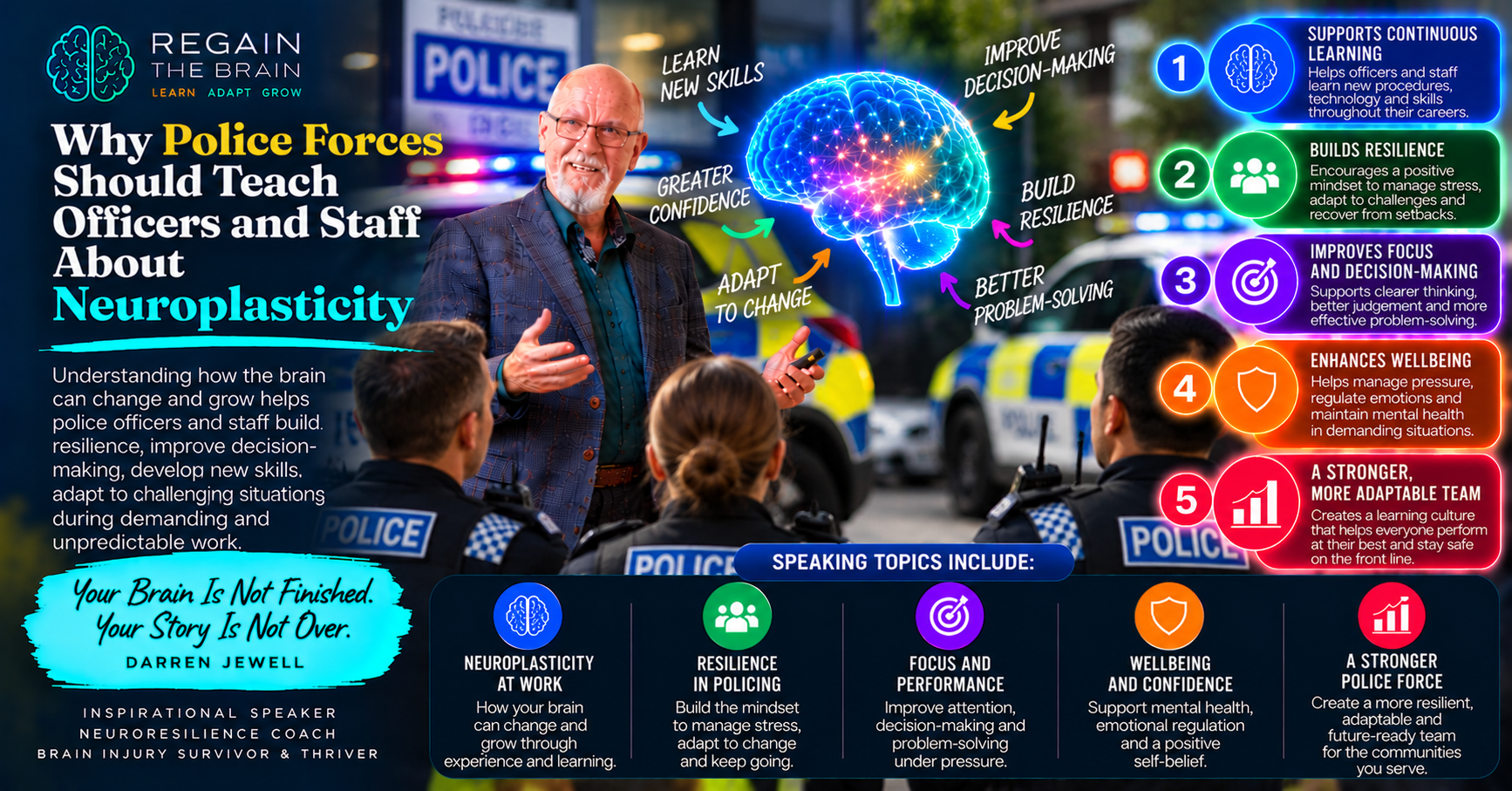
Every police officer relies on their brain to make decisions, assess situations, communicate effectively and respond to unexpected challenges. But how many have been introduced to the science of neuroplasticity?
Policing is a demanding profession.
Officers and police staff work in environments where attention, communication, judgement, adaptability and emotional regulation can be essential.
They must continually develop their knowledge while responding to changes in legislation, technology and community needs.
Understanding neuroplasticity can provide valuable insights into learning, professional development and resilience.
1. Understanding How the Brain Learns
Neuroplasticity is the brain’s ability to adapt and change its connections through experience, learning and other biological processes.
Police officers develop many skills through structured training, supervised experience and continuing professional development.
These can include communication, conflict management, investigative techniques, decision-making and the use of technology.
Learning involves changes across brain networks associated with attention, memory and behaviour.
Understanding this process can help officers appreciate the value of effective practice, reflection and feedback.
2. Developing Skills for Complex Decision-Making
Police officers frequently encounter situations where they must assess information and make decisions under pressure.
Effective decision-making depends on training, experience, appropriate procedures and the ability to recognise relevant information.
Understanding how learning develops can contribute to conversations about professional judgement and continuing skills development.
However, simply knowing about neuroplasticity does not automatically improve decision-making or guarantee better performance under pressure.
Practical training, supervision, organisational support and evidence-based procedures remain essential.
3. Building Resilience Without Ignoring Wellbeing
Police work can involve exposure to distressing situations, unpredictable demands and significant emotional pressures.
Resilience is therefore an important subject within police wellbeing programmes.
But resilience should never mean expecting officers to ignore stress or cope with traumatic experiences without support.
It involves recognising challenges, using appropriate coping strategies and knowing when to seek assistance.
Neuroplasticity can contribute to educational conversations about learning, adaptation and behaviour.
It is not a replacement for professional mental health support or trauma-informed care.
4. Supporting Confidence and Professional Development
Not every officer or member of police staff begins their career with complete confidence.
Developing professional competence takes time.
New recruits must learn unfamiliar procedures, experienced officers encounter changing responsibilities, and senior leaders face evolving organisational demands.
A growth mindset can encourage individuals to view learning as an ongoing process.
Understanding neuroplasticity may also help challenge the assumption that people become incapable of learning new skills as they grow older.
5. Why My Personal Story Is Relevant to Policing
My name is Darren Jewell.
I survived a serious brain injury when I was just 15 months old.
The injury left me facing physical challenges and difficulties with confidence.
Throughout my life, I encountered adversity, including bullying and situations that challenged my resilience.
For decades, I doubted my own abilities.
But later in life, I began learning the piano and exploring the science of neuroplasticity.
These experiences helped me reconsider beliefs I had held about myself for many years.
Today, I share my story as an inspirational speaker and NeuroResilience Coach.
My experiences are not the same as those of a police officer.
However, they offer a personal perspective on resilience, learning, confidence and adapting to difficult circumstances.
6. Why Police Forces Should Consider an Inspirational Speaker on Neuroplasticity
Police forces invest considerable resources in training, leadership development and employee wellbeing.
An inspirational presentation can complement these programmes by encouraging reflection and discussion.
My speaking topics include:
- Neuroplasticity and continuous professional development
- Workplace resilience and personal wellbeing
- Confidence and adapting to change
- Growth mindset and learning new skills
- Brain injury awareness and invisible disabilities
- Lifelong learning throughout a policing career
- Understanding individual differences and the importance of support
My aim is to entertain, educate and inform through accessible neuroscience and authentic personal storytelling.
7. Supporting Police Officers Beyond Their Careers
Police officers and staff may eventually move into retirement or different professional roles.
For some, leaving a career that has shaped their identity can create uncertainty.
Lifelong learning offers opportunities to develop interests, skills and connections beyond the workplace.
My experience of beginning piano lessons in my fifties demonstrates how becoming a beginner again can be rewarding.
Retirement from a profession does not have to mean retirement from learning.
Book an Inspirational Speaker for Your Police Event
Are you a police HR manager, wellbeing lead, training coordinator or senior officer organising a staff development event?
I would welcome the opportunity to discuss an inspirational presentation about neuroplasticity, resilience, confidence and lifelong learning.
Your Brain Is Not Finished. Your Story Is Not Over.
Darren Jewell
Inspirational Speaker | NeuroResilience Coach | Brain Injury Survivor & Thriver
#PoliceWellbeing #PoliceResilience #NeuroplasticityInPolicing #PoliceLeadership #PoliceTraining #MentalHealthAwareness #InspirationalSpeakerLondon #WorkplaceResilience #DarrenJewell #RegainTheBrain