Working in social care requires compassion, patience, communication and a willingness to keep learning.
Care professionals support people with different needs, abilities and life experiences.
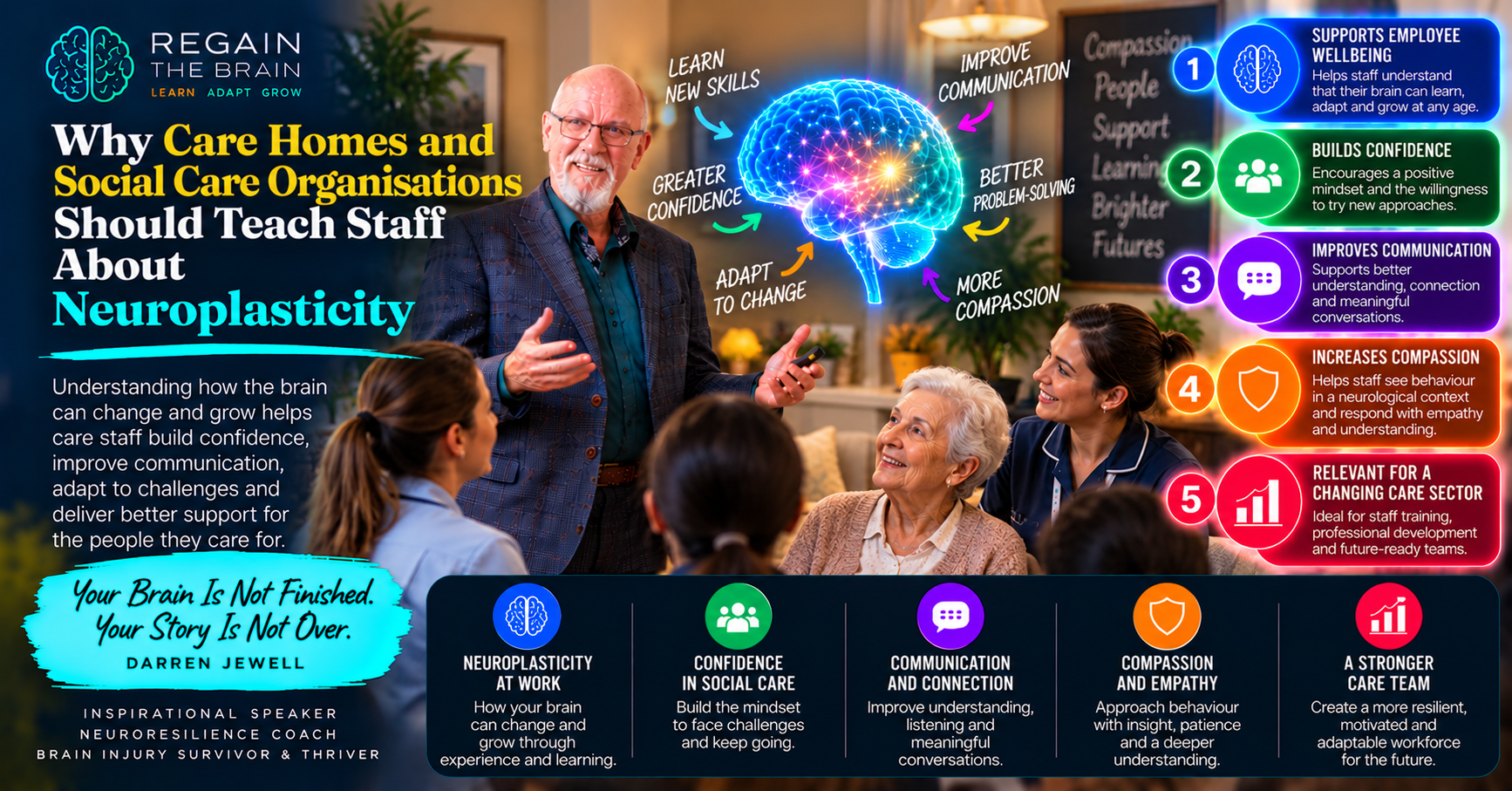
For care homes and social care organisations, understanding how the brain works can provide valuable educational opportunities.
One subject worth exploring is neuroplasticity.
What Is Neuroplasticity?
Neuroplasticity is the brain’s ability to adapt and change its connections through learning, experience and other biological processes.
It plays an important role in learning and can contribute to adaptation following some neurological injuries.
However, neuroplasticity does not mean that all neurological conditions can be reversed.
For care professionals, understanding both the possibilities and limitations of brain plasticity is important.
Why This Matters in Social Care
Care staff regularly encounter individuals living with dementia, stroke, brain injury and other neurological conditions.
An accessible introduction to neuroplasticity can help employees appreciate the complexity of brain function and the importance of individualised support.
It can also encourage staff to recognise their own continuing capacity to develop skills.
Communication techniques, new care procedures and professional qualifications all require learning.
My Personal Experience
My interest in brain health is deeply personal.
I survived a serious brain injury in early childhood.
I have also experienced the challenges of supporting family members affected by dementia.
These experiences have strengthened my interest in brain health, compassion and the needs of carers.
Today, I share my journey as an inspirational speaker and NeuroResilience Coach.
Supporting Care Staff Through Learning and Resilience
Social care employees often work in emotionally demanding environments.
Understanding resilience should never mean expecting staff to manage unreasonable pressures without support.
Instead, organisations can encourage wellbeing, effective communication, appropriate training and opportunities for professional development.
My presentations explore these subjects through personal storytelling and accessible neuroscience.
For care home managers, social care providers and staff development teams, a talk on neuroplasticity can complement wider training and wellbeing initiatives.
Caring for others begins with understanding people, including the people providing care.
To enquire about an inspirational talk for your care organisation, visit www.regainthebrain.com.
#NeuroplasticityInSocialCare #CareHomeStaffTraining #DementiaAwareness #CarerWellbeing #InspirationalSpeakerUK