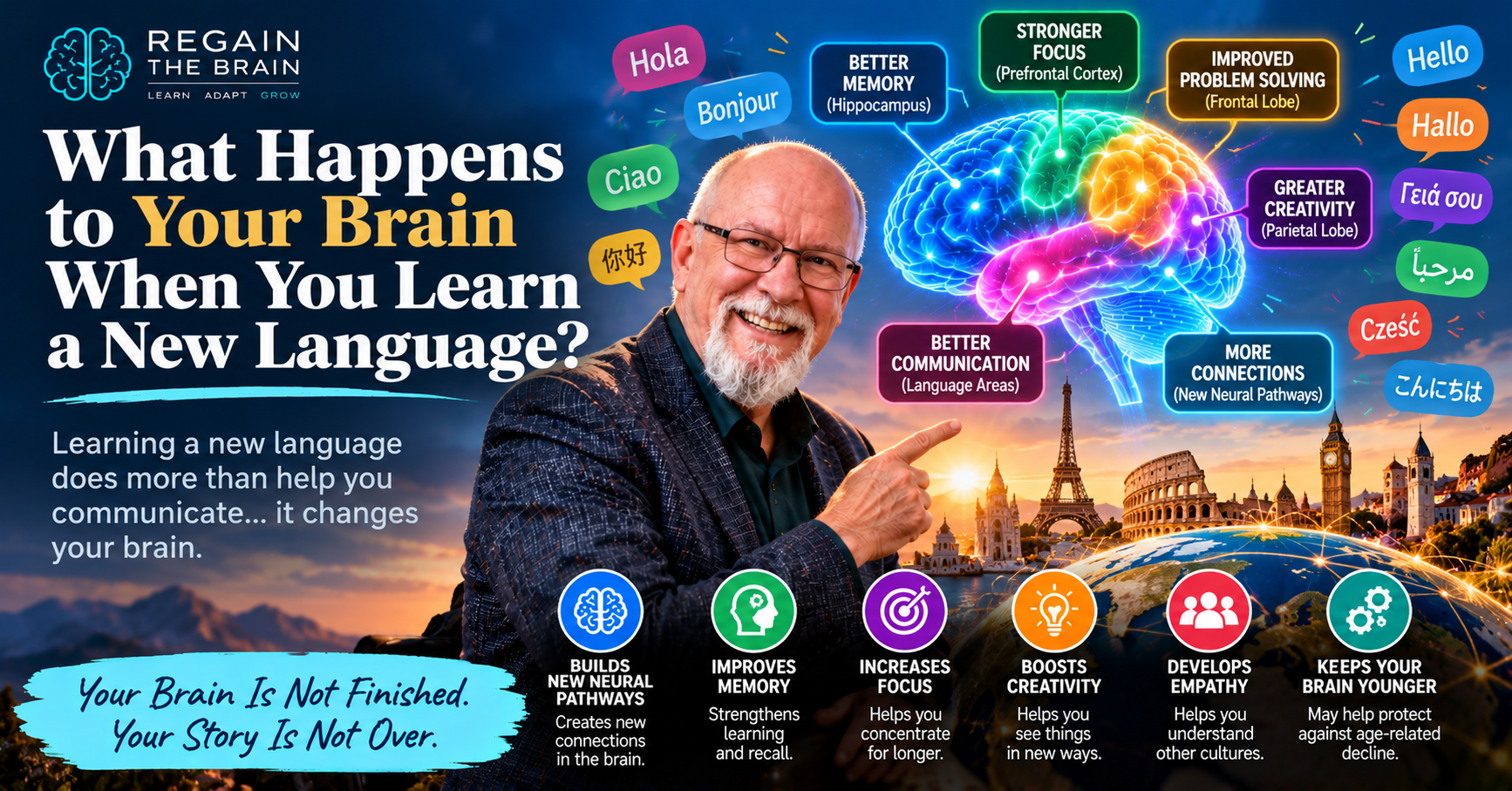
Learning another language is about more than preparing for a holiday or communicating with people from different cultures.
It also challenges the brain in interesting ways.
When we learn unfamiliar vocabulary, sounds and grammatical structures, we engage processes involving memory, attention, listening and language production.
With practice, the brain can adapt to the demands of these activities.
That makes learning a new language and the brain a fascinating subject within neuroplasticity.
You do not need to become fluent before the experience becomes meaningful.
Learning how to greet someone, order a meal or ask for directions can be a useful starting point.
I have become increasingly interested in language learning because it combines practical knowledge with opportunities to challenge ourselves.
It is also a reminder that technology can make learning more accessible.
Apps, audio lessons and interactive exercises can help us practise in ways that fit around everyday life.
The scientific evidence does not establish that learning a language will prevent dementia, but language learning can be an engaging and rewarding activity.
So next time you travel, why not learn a few words before you leave?
#LanguageLearning #Neuroplasticity #BrainHealth #LifelongLearning