Memory plays an important role in almost everything we do.
It helps us recognise familiar people, remember information and develop skills.
But memory is not a single process.
Different forms of memory involve different networks and mechanisms within the brain.
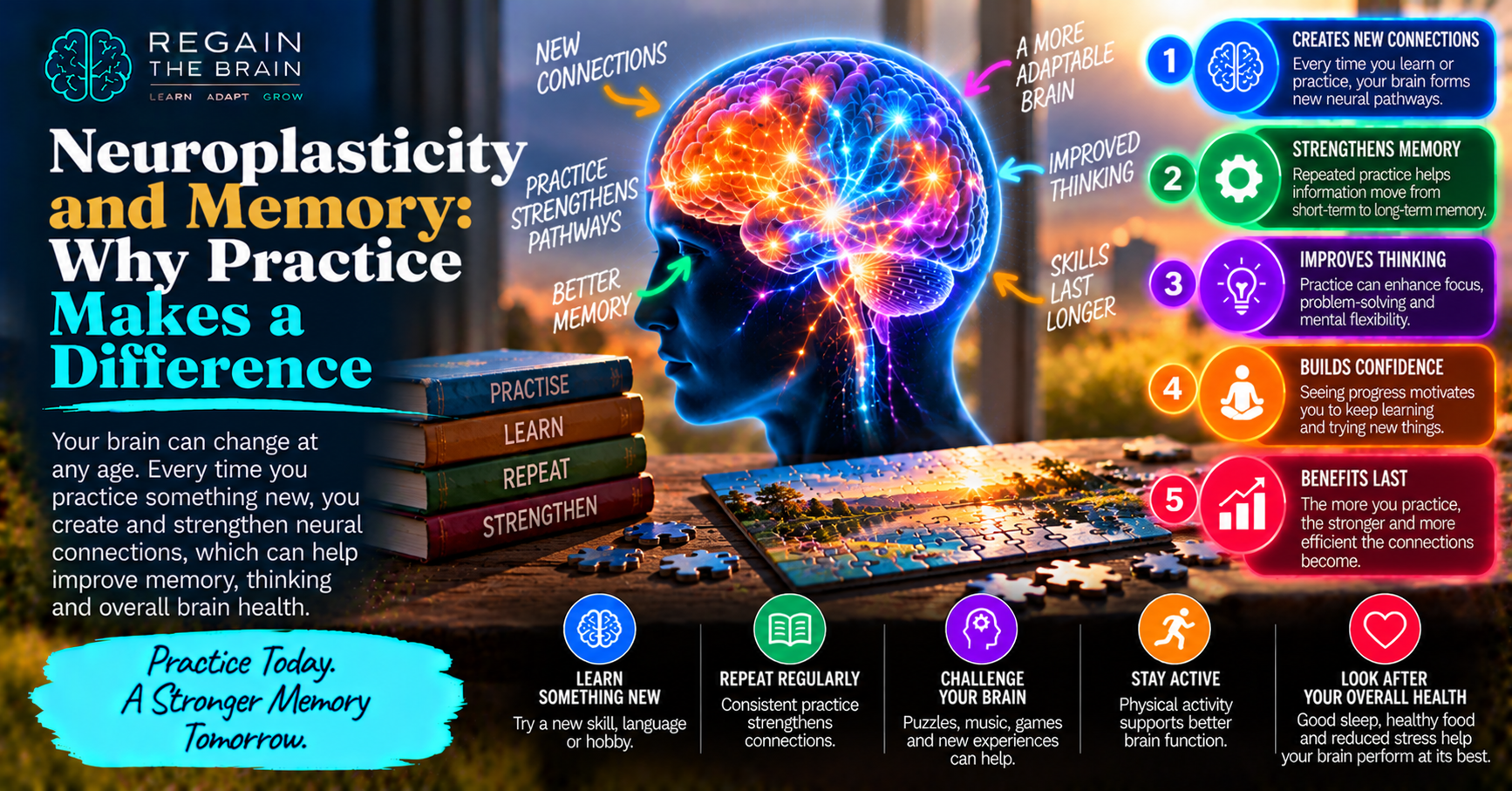
Neuroplasticity and memory are closely connected because learning can involve changes in the strength and organisation of neural connections.
When we practise retrieving information, revisit unfamiliar material or apply knowledge in different situations, we can support learning and retention.
This is one reason effective study methods matter.
For example, testing yourself on information can often be more useful than repeatedly reading the same material.
Spacing practice across several sessions can also support longer-term retention.
When learning the piano, I discovered the importance of returning to challenging passages rather than expecting immediate mastery.
Gradually, familiar patterns became easier to recognise and perform.
Of course, memory difficulties can have many causes, and significant or worsening changes deserve medical assessment.
Learning activities are not a substitute for healthcare.
But understanding how memory works can help us develop more effective learning habits.
At Regain the Brain, I encourage people to remain curious about the extraordinary processes involved in everyday learning.
#NeuroplasticityAndMemory #MemoryAndLearning #BrainHealth #Neuroplasticity