When was the last time you did something for the very first time?
Not something you already knew how to do.
Not another task in your daily routine.
But something completely unfamiliar that made you stop, concentrate, think and learn.
Perhaps you tried cooking a meal you had never prepared before.
Perhaps you started learning another language.
Or maybe you picked up a musical instrument for the first time.
These experiences may seem ordinary, but they highlight something extraordinary about the human brain.
Our brains retain the ability to learn and adapt throughout our lives.
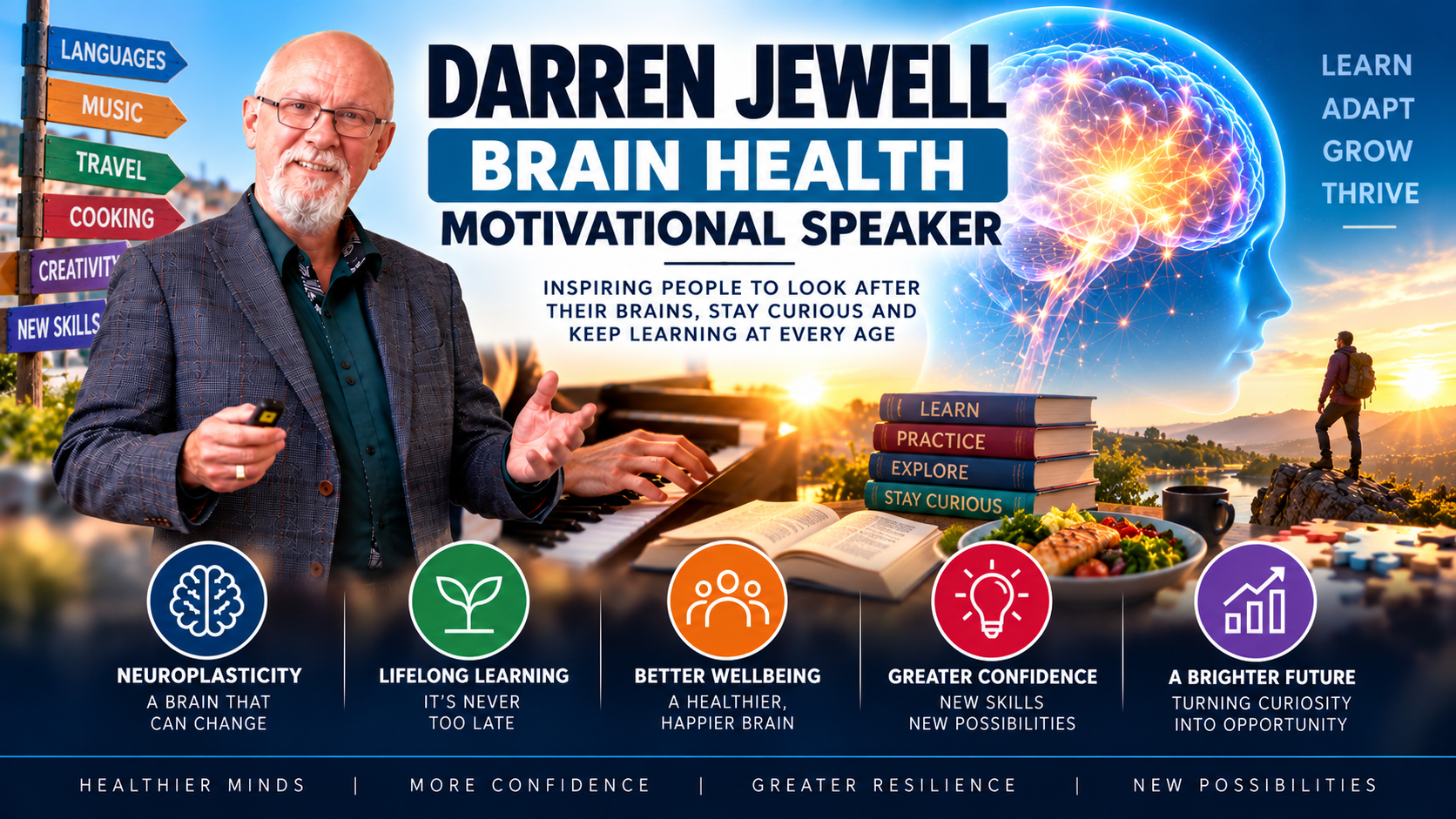
For Darren Jewell, brain health motivational speaker, neuroresilience coach and founder of Regain the Brain, this understanding has become a central part of his personal and professional journey.
Having experienced a brain injury, Darren has developed a passion for helping people understand neuroplasticity, resilience and the importance of continuing to learn regardless of age.
His message is simple:
You are never too old to learn something new, and your brain’s capacity for change does not disappear simply because you have celebrated another birthday.
Why Brain Health Matters at Every Age
We regularly hear about the importance of looking after our physical health.
We are encouraged to exercise, eat a balanced diet, get sufficient sleep and attend health appointments.
Yet conversations about brain health are sometimes limited to memory problems or neurological conditions.
In reality, brain health is relevant to everyone.
Our brains influence how we think, learn, remember, communicate, move and respond to the world around us.
Brain health is shaped by many factors, including physical activity, sleep, cardiovascular health, nutrition, social relationships and opportunities for mental engagement.
No single activity can guarantee protection against cognitive decline.
However, developing healthy habits and remaining engaged with life can contribute to overall wellbeing.
Darren believes that greater awareness of brain health can encourage people to make informed choices and remain curious about their abilities.
Darren Jewell: A Brain Health Motivational Speaker with Lived Experience
There is a difference between learning about the brain from a textbook and experiencing circumstances that change how your own brain functions.
Darren’s experience of brain injury has shaped his understanding of resilience, adaptability and the importance of recognising individual challenges.
A brain injury can affect concentration, memory, confidence and everyday activities.
Some consequences may be immediately visible.
Others may be difficult for people around us to recognise.
Recovery and adaptation can also vary considerably between individuals.
For Darren, these experiences have contributed to his interest in neuroplasticity and the ways learning can influence the brain.
His journey has encouraged him to share an important message with audiences.
Life-changing circumstances may require us to approach familiar activities differently.
But they do not necessarily remove every opportunity for learning, enjoyment or personal development.
As an inspirational speaker, Darren connects his personal experiences with accessible discussions about neuroscience and lifelong learning.
What Is Neuroplasticity?
Neuroplasticity describes the brain’s ability to change and reorganise its connections in response to experience, learning and certain forms of injury.
Our brains contain billions of neurons that communicate through complex networks.
When we practise unfamiliar skills, learn new information or adapt to different circumstances, activity within these networks can change.
With repetition and appropriate feedback, some neural connections can become more efficient.
These processes contribute to learning, memory and skill development.
For example, when someone begins learning a musical instrument, they must coordinate movements, recognise patterns and develop familiarity with unfamiliar information.
With practice, tasks that initially require considerable concentration may become easier.
Neuroplasticity is involved in this process.
Importantly, the adult brain retains the ability to adapt.
Although learning may change with age and individual circumstances, it does not simply stop when we reach adulthood.
This is one of the messages Darren wants audiences to understand.
The brain is not a finished product. It continues responding to our experiences throughout life.
Why Lifelong Learning Is So Important
Learning is often associated with formal education.
We attend school, perhaps continue to university or complete professional training, and then begin our working lives.
But why should learning end there?
Darren believes education should be viewed as a lifelong opportunity rather than something confined to childhood and early adulthood.
Learning unfamiliar skills can provide cognitive challenges, enjoyment and opportunities for social connection.
It can also encourage confidence as people discover new abilities.
The activity itself does not need to be complicated.
It could involve learning how to use a new application.
Trying photography.
Joining a local class.
Studying a language.
Or experimenting with a new recipe.
The important element is the opportunity to engage with something unfamiliar.
Darren encourages people to see learning not as another obligation but as an enjoyable part of everyday life.
Learning Piano at 54: Why Darren Decided to Become a Beginner Again
One of Darren’s personal examples of lifelong learning is his decision to begin learning the piano at 54.
For many adults, starting a musical instrument later in life can feel intimidating.
They may believe they have missed their opportunity.
They may worry about making mistakes.
Or they may compare themselves with people who began learning during childhood.
Darren challenges this way of thinking.
Learning the piano involves attention, coordination, timing, memory and repeated practice.
At first, even simple exercises may require considerable concentration.
But over time, familiarity can develop.
For Darren, the experience is not about becoming a concert pianist.
It is about embracing curiosity and challenging assumptions about age.
He believes we should celebrate the willingness to begin something new rather than judging ourselves solely by how quickly we become proficient.
Being a beginner is not something to be embarrassed about. It is evidence that you are still willing to learn.
Seven Everyday Activities That Can Challenge Your Brain
Keeping mentally engaged does not necessarily require expensive equipment or specialist programmes.
Everyday activities can provide opportunities for learning and cognitive engagement.
1. Learn a new language
Learning a language involves memory, attention, listening and recognising unfamiliar patterns.
Even learning a few words before travelling can be an enjoyable challenge.
It may also help people connect with different cultures and communities.
2. Try cooking an unfamiliar recipe
Cooking something new requires planning, sequencing, attention and coordination.
Following unfamiliar instructions can provide an opportunity to practise different skills.
And there is the added satisfaction of enjoying the finished meal.
3. Learn a musical instrument
Playing an instrument involves several cognitive and physical processes.
Reading music, coordinating movements and maintaining rhythm can provide an engaging learning experience.
4. Explore new technology
Technology changes rapidly.
Learning to use an unfamiliar application, digital device or software feature can encourage problem-solving and adaptability.
5. Take up a creative hobby
Painting, photography, writing and other creative activities provide opportunities to experiment and develop skills.
Creative expression can also offer enjoyment and a sense of achievement.
6. Play games that require thinking
Puzzles, strategy games, memory activities and certain computer games can engage attention, planning and problem-solving.
However, improvement at a particular game does not necessarily translate into broad improvements in memory or everyday cognitive functioning.
Games are best viewed as one enjoyable form of mental engagement rather than a guaranteed method of preventing cognitive decline.
7. Learn something completely unexpected
Sometimes the most interesting learning experiences are the ones we would never previously have considered.
Try exploring a subject outside your usual interests.
Attend a workshop.
Visit a museum.
Or learn about a different culture.
Curiosity can lead us in directions we never imagined.
Brain Health Is About More Than Brain Training
Although mental engagement is valuable, brain health involves much more than puzzles and learning exercises.
Research suggests that several lifestyle factors contribute to long-term cognitive health.
Physical activity: Regular movement supports cardiovascular health and is associated with benefits for brain health.
Sleep: Adequate sleep is important for memory, attention and overall wellbeing.
Social connection: Meaningful relationships can contribute to emotional and cognitive wellbeing.
Balanced nutrition: Healthy dietary patterns support overall physical and neurological health.
Managing cardiovascular risk: Blood pressure, diabetes, smoking and other cardiovascular factors can influence brain health.
Mental engagement: Learning, reading, creative activities and other intellectually stimulating experiences can provide opportunities for cognitive engagement.
Darren’s emphasis on lifelong learning fits within this broader understanding of brain health.
The message is not that one activity can prevent neurological illness.
It is that a varied, healthy and engaged lifestyle can support wellbeing.
Why Businesses Should Care About Brain Health
Brain health is not simply a personal concern.
It also has implications for workplaces.
Employees rely on attention, memory, communication and decision-making throughout the working day.
Workplace conditions can influence these abilities.
Excessive stress, insufficient sleep, unrealistic workloads and inadequate support may affect concentration and performance.
Businesses that take employee wellbeing seriously can help create environments that support healthier working practices.
This may involve encouraging appropriate breaks, providing opportunities for professional development and supporting employees experiencing health challenges.
It can also mean recognising the importance of inclusive working environments.
Darren’s speaking encourages organisations to consider the relationship between brain health, resilience and sustainable performance.
Brain Health and Leadership
Business leaders regularly make decisions under pressure.
They must evaluate information, communicate effectively and respond to changing circumstances.
These demands can be affected by fatigue, stress and insufficient recovery.
Understanding brain health can encourage leaders to think more carefully about sustainable performance.
It can also help challenge the assumption that working longer hours automatically produces better results.
A healthy organisational culture recognises the importance of rest, learning and supportive leadership.
Darren’s message encourages leaders to consider how they can create environments where people have opportunities to develop without being overwhelmed by unrealistic expectations.
The Connection Between Brain Health and Resilience
Resilience is frequently discussed in relation to adversity.
However, our ability to respond to challenges can be influenced by physical health, emotional wellbeing and social support.
Someone experiencing prolonged sleep deprivation or excessive stress may find it more difficult to concentrate and make decisions.
This does not mean they lack resilience.
It means that human performance is affected by circumstances.
Darren believes resilience should be understood as more than individual determination.
It includes recognising limitations, adapting approaches and seeking appropriate support.
His experience of brain injury provides a personal perspective on why understanding individual circumstances matters.
Why Age Should Not Stop Us from Learning
Ageing is associated with changes in some aspects of cognition.
For example, certain tasks may take longer to learn as we grow older.
However, this does not mean that older adults lose the ability to develop new skills.
Many people continue learning languages, instruments, technologies and creative activities well into later life.
Previous experience and accumulated knowledge can also provide advantages in particular learning situations.
Darren encourages audiences to challenge the idea that curiosity belongs primarily to younger generations.
Learning can remain meaningful at every age.
And the enjoyment of discovering something new does not depend on achieving professional-level expertise.
The question should not be, “Am I too old to begin?” but rather, “What would I enjoy learning next?”
The Role of Technology in Lifelong Learning
Technology has made educational resources more accessible than ever before.
People can explore online courses, language-learning applications, digital libraries and interactive learning activities.
Artificial intelligence is also creating new opportunities for personalised explanations, practice and educational support.
Darren’s interest in technology and learning reflects his belief that digital tools can encourage people to explore unfamiliar subjects.
However, technology should support learning rather than replace meaningful human interaction, physical activity or other important aspects of wellbeing.
The most useful tools are those that make learning accessible, engaging and appropriate for the individual.
What Can Audiences Expect from a Brain Health Motivational Speaker?
An effective brain health presentation should combine accessible information with ideas that audiences can relate to their everyday lives.
Darren’s approach draws on his lived experience of brain injury, his interest in neuroscience and his passion for lifelong learning.
His speaking themes include:
- Understanding neuroplasticity and the brain’s ability to adapt.
- Challenging misconceptions about ageing and learning.
- Exploring the relationship between brain health and everyday habits.
- Encouraging curiosity and lifelong learning.
- Recognising the importance of resilience and confidence.
- Understanding some of the challenges associated with brain injury.
- Inspiring audiences to explore unfamiliar activities and skills.
The aim is to encourage people to appreciate the brain’s complexity while recognising practical opportunities to remain engaged and curious.
Regain the Brain: Encouraging Curiosity and Lifelong Learning
Regain the Brain reflects Darren’s commitment to helping people understand neuroplasticity, resilience and personal development.
His philosophy is based on a simple belief.
Learning should never stop.
It does not need to involve formal qualifications.
It does not need to be expensive.
And it certainly does not need to result in perfection.
Sometimes learning means preparing a meal you have never cooked before.
Sometimes it means trying a musical instrument.
Sometimes it means discovering a few words in another language.
And sometimes it means exploring a subject simply because it interests you.
For Darren, these experiences are reminders that curiosity can continue enriching our lives.
Book Darren Jewell as a Brain Health Motivational Speaker
Are you organising a corporate wellbeing event, healthcare conference, educational programme, charity gathering or inspirational speaking event?
Darren Jewell brings a personal perspective to discussions about brain health, neuroplasticity, resilience and lifelong learning.
As an inspirational speaker, neuroresilience coach and founder of Regain the Brain, he draws on his experience of brain injury to encourage audiences to appreciate the importance of learning and adaptation.
His message is relevant to organisations interested in employee wellbeing, personal development, healthy ageing and greater awareness of the brain.
Whether speaking to business leaders, healthcare professionals, educators or community groups, Darren encourages people to remain curious about their abilities.
Your brain has already helped you learn an extraordinary amount throughout your life. Imagine what you might still discover if you remain willing to try something new.
To discover more about Darren Jewell and his inspirational speaking, visit www.regainthebrain.com.
Darren Jewell is an inspirational speaker, neuroresilience coach and founder of Regain the Brain. Drawing on his lived experience of brain injury, he promotes greater awareness of neuroplasticity, resilience, brain health and lifelong learning.
This article is intended for educational purposes and does not replace professional medical advice. Brain health outcomes vary, and no single activity can guarantee protection against cognitive decline.