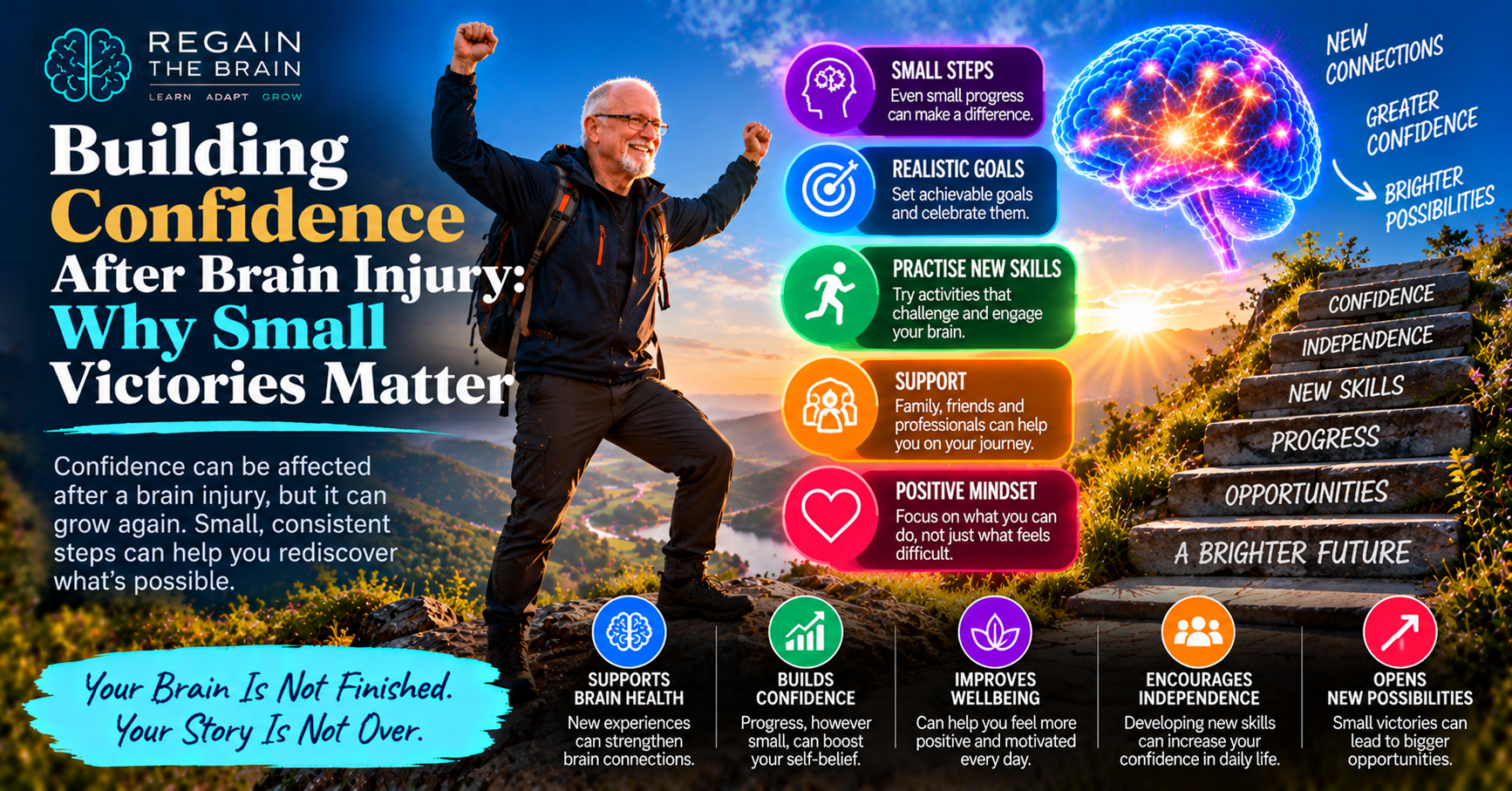
Confidence can be difficult to rebuild after a life-changing experience.
For people living with brain injury, changes in physical or cognitive abilities may affect how they see themselves.
Activities that once felt straightforward may become more demanding.
Some people may feel anxious about trying unfamiliar things or returning to situations they previously enjoyed.
Building confidence after brain injury is therefore about more than positive thinking.
It may involve rehabilitation, appropriate adjustments, emotional support and opportunities to experience success.
In my own life, confidence was something I struggled with for many years.
I often focused on what I believed I could not do rather than exploring what might still be possible.
Learning the piano helped me challenge some of those assumptions.
Progress was gradual, but every small improvement gave me another reason to continue.
I learned that confidence does not always arrive before action.
Sometimes it develops through manageable experiences.
For someone recovering from a brain injury, a meaningful achievement might be completing a daily activity, returning to a hobby or developing a new strategy for independence.
There is no universal timetable.
What matters is recognising progress in the context of each person’s journey.
Small victories deserve recognition.
#ConfidenceAfterBrainInjury #BrainInjuryResilience #PersonalGrowth #Neuroplasticity