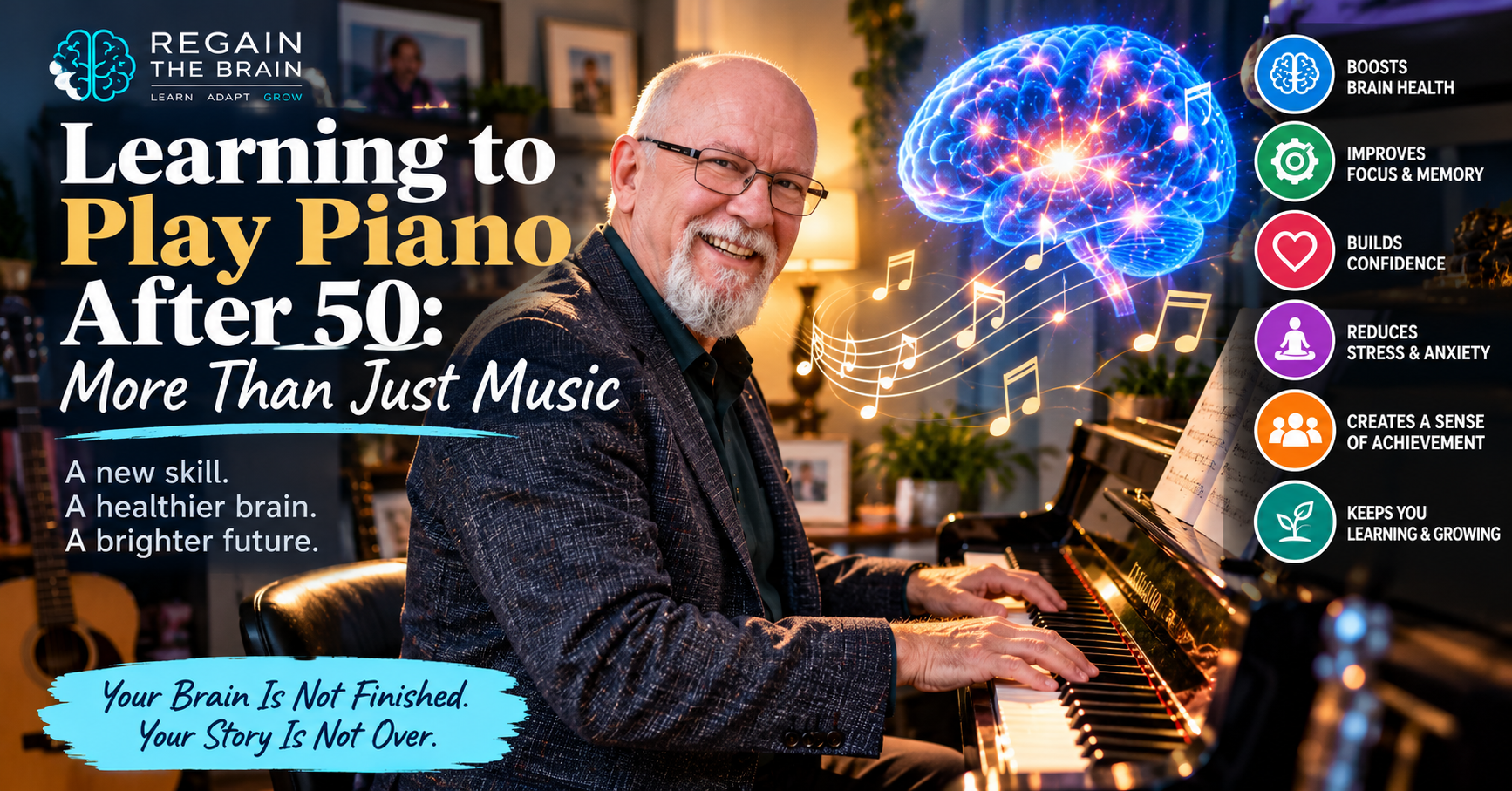
When I decided to learn the piano in my fifties, I was not simply taking up another hobby.
I was challenging myself to do something unfamiliar.
Learning music requires us to combine several skills.
We must recognise notes, coordinate movements, maintain rhythm, listen carefully and remember what we have practised.
For someone with a history of brain injury, that experience can carry additional personal meaning.
My own journey has involved frustration, mistakes and gradual improvement.
But it has also provided moments of satisfaction that I might never have experienced had I decided I was too old to begin.
Learning to play piano after 50 is one example of how lifelong learning can support cognitive engagement and personal wellbeing.
It does not guarantee improved neurological function or recovery from injury.
What it can offer is a meaningful challenge, a creative outlet and an opportunity to develop a new skill.
Perhaps music is not your passion.
It might be painting, cooking, dancing or learning a language.
The activity matters less than finding something you enjoy enough to keep exploring.
#LearningPianoAfter50 #NeuroplasticityAfter50 #BrainHealth #LifelongLearning