For many years, scientists believed that the adult brain was largely fixed. Once we reached a certain age, our ability to change and develop was thought to be limited.
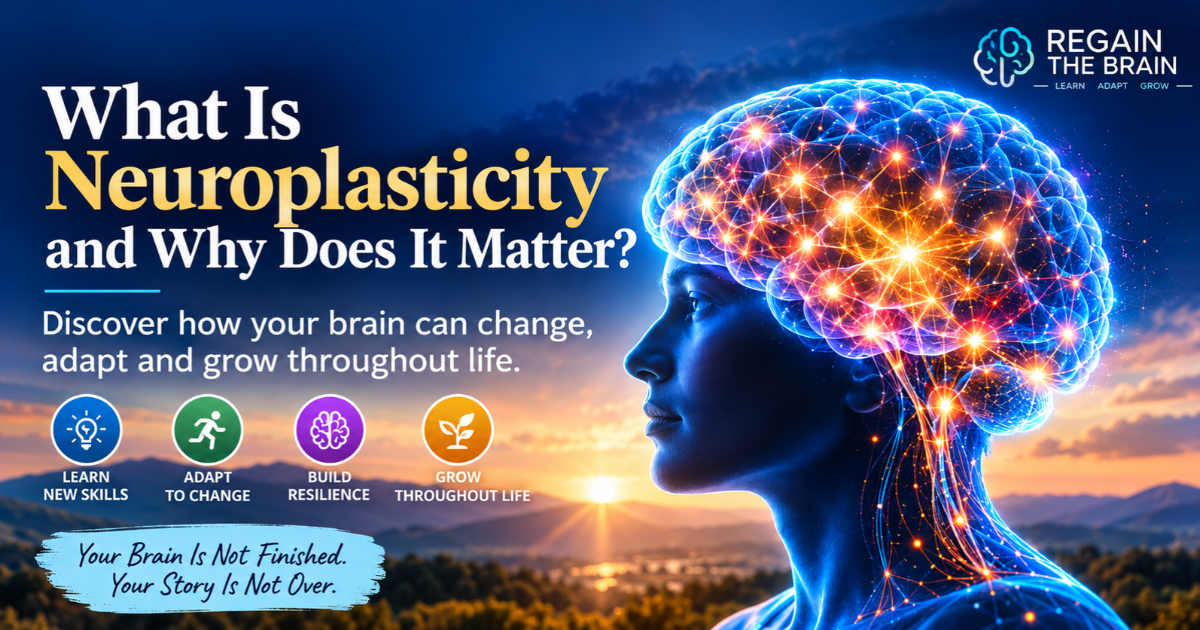
Today, we know that the brain retains a remarkable capacity to adapt throughout life. This ability is called neuroplasticity.
Neuroplasticity describes the brain’s capacity to reorganise its connections in response to learning, experience and, in some circumstances, injury.
Every time we practise a new skill, challenge our thinking or repeat an unfamiliar activity, we give our brain opportunities to strengthen and refine neural pathways.
Learning to play a musical instrument, studying a language, developing a new hobby or practising a different movement can all engage this process.
The important message is that neuroplasticity is not reserved for children or young adults. It continues throughout our lives, although the rate and nature of change vary between individuals.
Your brain is not finished. Your story is not over.
At Regain the Brain, I encourage people to embrace lifelong learning and discover what they may still be capable of achieving.
#Neuroplasticity #BrainHealth #LifelongLearning #RegainTheBrain